


Unveiling the Beliefs of the Pharisees and Sadducees: Exploring the Differences in Teachings compared to Jesus
- Danny Barnett
- Oct 24, 2024
- 5 min read
The religious environment of first-century Judea was diverse, filled with different sects that held distinct beliefs. Among them, the Pharisees and Sadducees were two powerful groups that significantly influenced society and theology. Their differing ideologies not only marked their time but also laid the groundwork for subsequent theological discussions. In this post, we will explore the beliefs of these two factions and how they contrasted with those of Jesus, shedding light on pivotal moments in Judeo-Christian history.

Who Were the Pharisees?
The Pharisees emerged as a prominent religious group during the Second Temple period. They were dedicated to an intensive interpretation of Jewish law and adhered to oral traditions alongside the written Torah. Their commitment to purity shaped their daily life, influencing both personal and communal practices.
The term "Pharisee" means "separated ones," which reflects their aim to maintain a unique identity through strict observance of the Law. Unlike other groups, they emphasized the significance of both the written law (the Torah) and the oral law, enhancing the understanding and application of Scriptures.
A key belief of the Pharisees was in the resurrection of the dead. This belief offered hope for many Jews, suggesting that individuals could have a second chance based on their actions. For instance, approximately 70% of Jews in Judea at the time identified with the Pharisaic view of afterlife beliefs. Additionally, they acknowledged the existence of angels and spirits, fostering a vibrant spiritual worldview.
The Pharisees aimed to integrate the law into all aspects of life. This commitment to religious practice helped shape Rabbinic Judaism, which carries influence to this day.

Who Were the Sadducees?
In stark contrast, the Sadducees were a sect primarily composed of the priestly and wealthy elite, focused more on preserving the socio-political order than on spiritual matters. They insisted on obeying strictly the written law, dismissing the oral traditions that the Pharisees valued.
Shocking to many, the Sadducees denied the resurrection of the dead, which was a fundamental aspect of Pharisaic belief. They also did not believe in spirits or angels, promoting a more materialistic view of life. Their rationalist perspective meant they avoided engaging in debates based on oral laws, focusing solely on the Torah.
The Sadducees' political role often put them at odds with the common people. They prioritized Temple rites and collaborated with Roman authorities to maintain their status, leading to a growing sense of discontent among the less privileged Jews who felt marginalized both spiritually and socially.
Key Differences Between the Pharisees, Sadducees, and Jesus
The Pharisees and Sadducees, while influential, held beliefs that diverged significantly from those of Jesus. Understanding these differences helps to clarify Jesus' unique teachings.
The Nature of God and Authority
The Pharisees perceived God as intimately involved in human experiences. They believed that following the Law allowed for a close relationship with Him. On the other hand, the Sadducees' concept of God leaned toward a detached existence, emphasizing divine sovereignty without the need for close human interaction.
Jesus introduced a revolutionary view of God. He depicted God not just as a lawgiver, but as a loving and approachable Father. For example, in Matthew 6:9-13, Jesus taught His disciples to pray to “Our Father in heaven.” This approach not only departed from the legalistic views of the Pharisees but also resonated deeply with the people, drawing significant followers to His ministry.
Perspectives on the Law
The Pharisees valued the Law as a guide for spiritual growth and community identity but often fell into the trap of legalism. They became more focused on rules than on the essence of faith. Jesus did not reject the Law; He emphasized its core purpose by teaching that love for God and one’s neighbor is paramount.
The Sadducees, by rejecting oral tradition, distanced themselves from the community's spiritual needs. In contrast, Jesus performed miracles and welcomed marginalized figures, emphasizing that compassion was essential to fulfilling the law. For instance, His healing on the Sabbath challenged the Sadducees' and Pharisees' rigid interpretations, illustrating that human need supersedes legal formalism.
Concepts of Afterlife and Resurrection
The belief in an afterlife varied sharply between the two groups. The Pharisees held the view that one's actions influenced their afterlife and that the promise of resurrection was available to believers. Interestingly, according to surveys of Jewish thought at the time, roughly 40% of the population held similar views as the Pharisees about the afterlife.
Conversely, the Sadducees focused solely on the present life, insisting on a more materialistic understanding of existence. But Jesus upheld the Pharisaic perspective, illustrating the reality of resurrection and eternal life through parables and His own resurrection, a pivotal moment that strengthened the foundations for Christian belief.
The Encounter Between Jesus and the Pharisees
Throughout the Gospels, the interactions between Jesus and the Pharisees are noteworthy teaching moments. For example, in Matthew 23:27-28, Jesus pointed out their hypocrisy by likening them to tombs that look beautiful from the outside but are filled with decay within. This highlights the importance of inner integrity over outward appearances in faith practice.
Jesus frequently extended the invitation of the kingdom of God to everyone, counteracting the exclusivity practiced by some Pharisees. This message of inclusion was pivotal in reshaping community relationships, emphasizing that belonging to God's kingdom was accessible to all, not limited by legalistic adherence.
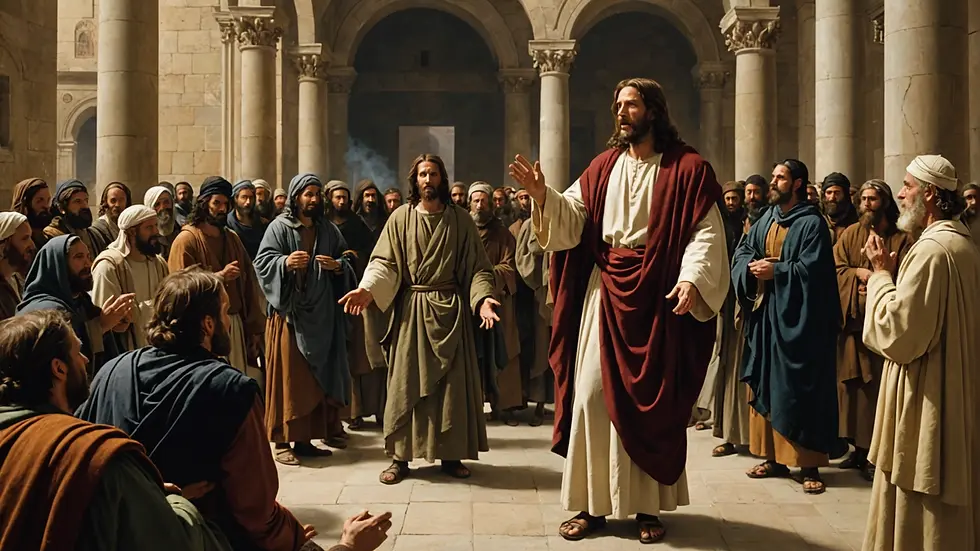
The Encounter Between Jesus and the Sadducees
Similarly, Jesus’ interactions with the Sadducees often centered around timeless theological debates. A notable example occurs in Matthew 22:23-33, where the Sadducees posed a question about a woman who married multiple brothers in succession. Their intention was to ridicule the notion of resurrection, but Jesus responded by illustrating that God is the God of the living, thus affirming the reality of eternal life.
By addressing their doubts with wisdom, Jesus showcased His understanding of divine power, shifting the discussion from mere human logic to a profound spiritual revelation that directly challenged Sadducean views.
Final Thoughts
The beliefs of the Pharisees and Sadducees underscore two contrasting approaches to faith during Jesus' ministry. The Pharisees’ commitment to oral traditions and a hopeful view of resurrection juxtaposes sharply with the Sadducees’ focus on the written law and a finite understanding of existence.
Jesus’ teachings emerged as a profound challenge to both groups. He called for a faith rooted in love, grace, and personal connection with God, moving beyond mere legalism.
This examination of Pharisaic and Sadducean beliefs invites us to reflect on our own spiritual practices. In pursuing a faith that embodies love and relationships, we can better align ourselves with the teachings of Jesus. Understanding these historical contexts provides rich insights into our present spiritual journeys and emphasizes the importance of mercy and grace in our lives.
As we engage with these beliefs, we gain clarity on how they continue to shape contemporary faith discussions and provoke us toward deeper understanding and practice.
Thank you for taking the time to read this study. Please join us every Thursday at 7 pm Central Time for a live Bible study.


Comments